
The Honest Answer Nobody Gives You
When people ask me what an authority video is, they usually mean: what is the one video I can make that will establish my credibility and start bringing in enquiries?
That is not how authority works. And the sooner you understand that, the sooner you can stop chasing the wrong thing.
Authority is not a single piece of content. It is what happens when the right person spends enough time with your body of work that they arrive at a conversation with you already trusting you. Already convinced. Already, in some sense, sold.
That does not happen from one video. It happens from ten, or fifteen, or twenty — published consistently, on topics your audience actually cares about, over a period of months and years.
It is a long game. The businesses that understand this, and plan accordingly, win. The ones that don’t tend to publish a handful of videos, hear nothing back, and conclude that video does not work for them.
It worked. They just stopped too early.
The Drama Series Principle
Think about the last television drama you got genuinely invested in.
Did you care deeply about the characters in the opening five minutes? Probably not. You were still working out who everyone was. The stakes had not been established. You had not yet spent enough time with these people to feel anything about what happened to them.
But by episode three or four — assuming the writing was good — something shifted. You started to recognise the patterns of how each character thinks. You understood what they wanted and what was in their way. You had spent enough time with them that their outcomes mattered to you.
That is the same mechanism at work when someone discovers your video content.
The first video they watch, they are working out who you are. The second, they are starting to recognise your way of thinking. By the fifth or sixth, if your content has been consistently useful, they are starting to trust you. By the time they have spent several hours in your world, something has happened that no single polished video could create: they feel like they know you.
And people do business with people they feel like they know.
The Seven-Hour Benchmark
Google published research that has become one of the most important data points in content marketing.
According to their findings, today’s buyers typically need around seven hours of engagement with a brand’s content, across eleven separate touchpoints, on four different platforms, before they are ready to make a purchase decision.
Seven hours.
Think about what that means for a single LinkedIn post. Or a monthly newsletter. Or a website with three pages of static copy and no content library behind it.
Now think about what it means for a YouTube channel with fifteen focused, well-structured videos on topics your ideal clients are actively searching for.
A new visitor to that channel can spend an afternoon in your world. They can watch you think through problems, explain concepts, answer the questions they have been wondering about for months. By the time they close the browser, they have not just found a supplier. They have found someone they trust.
That is what a body of authority video content does. No other marketing format builds those hours as efficiently.
What This Actually Looks Like in Practice
Building an authority video library does not mean filming a video every day. It means choosing a focused area of expertise and publishing useful, evergreen content on that topic — consistently, over a long period of time.
A few principles that make the difference:
- Stay evergreen. Avoid references to current events, specific dates, or anything that will date the video. A video explaining how pension drawdown works will still be relevant in three years. A video reacting to last week’s budget probably will not.
- Be specific about who you are talking to. The more precisely you define your audience inside the video — ‘if you are a small business owner approaching retirement’ — the more powerfully that person will feel that the content is for them.
- Publish on YouTube first. YouTube is a search engine, not a social platform. Content has an indefinitely long shelf life. A video you publish today will still be discoverable in two years, building trust with people who have not yet found you.
- One focused topic per video. Resist the urge to cover everything in a single video. Depth on a narrow question is more useful — and more trustworthy — than a broad overview of everything you know.
- Consistency over perfection. A clear, well-lit video published every week will outperform a cinematic production published twice a year. The algorithm rewards consistency. More importantly, your audience does too.
The Timeline Question
This is the part most people do not want to hear.
Research from HubSpot — one of the most widely cited sources on content marketing performance — consistently shows that content takes six to twelve months before it generates meaningful organic traffic. For video, the trust-building cycle is longer still.
Ahrefs, analysing over a billion web pages, found that the vast majority of content earns no meaningful organic reach in its first year. The pages that rank well have typically been live for two years or more.
A realistic expectation for video content to drive consistent, measurable enquiries is twelve to twenty-four months of regular publishing.
That is not a reason to be discouraged. It is a reason to start now, with the right expectations, and not stop.
The businesses that start building their video library today will have a two-year head start over the ones who decide to think about it next quarter.
What Authority Video Is Not
It is worth being clear about what this is not — because there is a lot of noise in this space.
| • It is not virality. Going viral might bring attention. It rarely builds the kind of deep, specific trust that converts into high-value clients for a service business. The people who need a wealth manager, an accountant, or a specialist consultant are not making that decision because something got a million views.
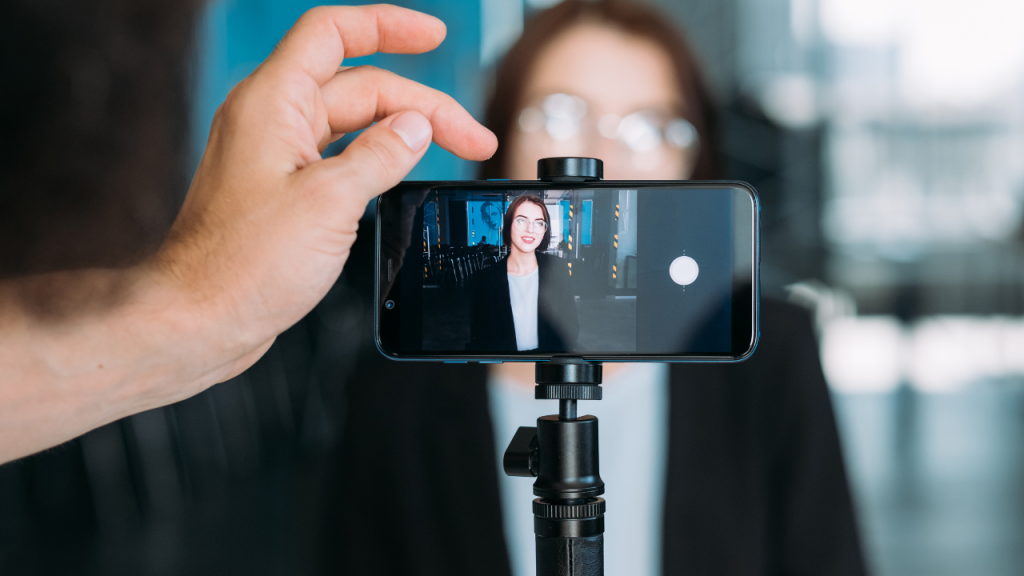
• It is not production value. A smartphone video with good lighting and clear audio, published consistently on a topic your audience cares about, will build more authority than an expensively produced video posted once and never followed up. • It is not a campaign. Campaigns have a start and an end. Authority video does not. It is a commitment to showing up, consistently, for as long as you are in business. • It is not about you. The most common mistake is making videos about your process, your credentials, your methodology. Authority video is about your audience’s problems. You appear as the guide, not the hero. |
Summary
Video is not a magic button. It is not a campaign you run for three months and then review. It is not a single polished production that solves your visibility problem overnight.
It is a long-term decision to scale connection. To build trust systematically. To create a body of work that allows the right people to spend real time with you — so that when they are ready to make a decision, they already know who they want to call.
The businesses that understand this, and start building now, are the ones that will still be growing two years from now.
The ones that wait for a magic button will still be waiting.
